Crustaceans, claws and culinary delights - (and what is a hepatopancreas??)
Some restaurants get chosen because someone (Nina) did their (her) research. This one we chose because Vilde said so. Vilde is a professional musician, and she has an eye for art. A seafood restaurant with a giant spray-painted crab covering its shutters definitly qualifies in several art genres. You’ll see:
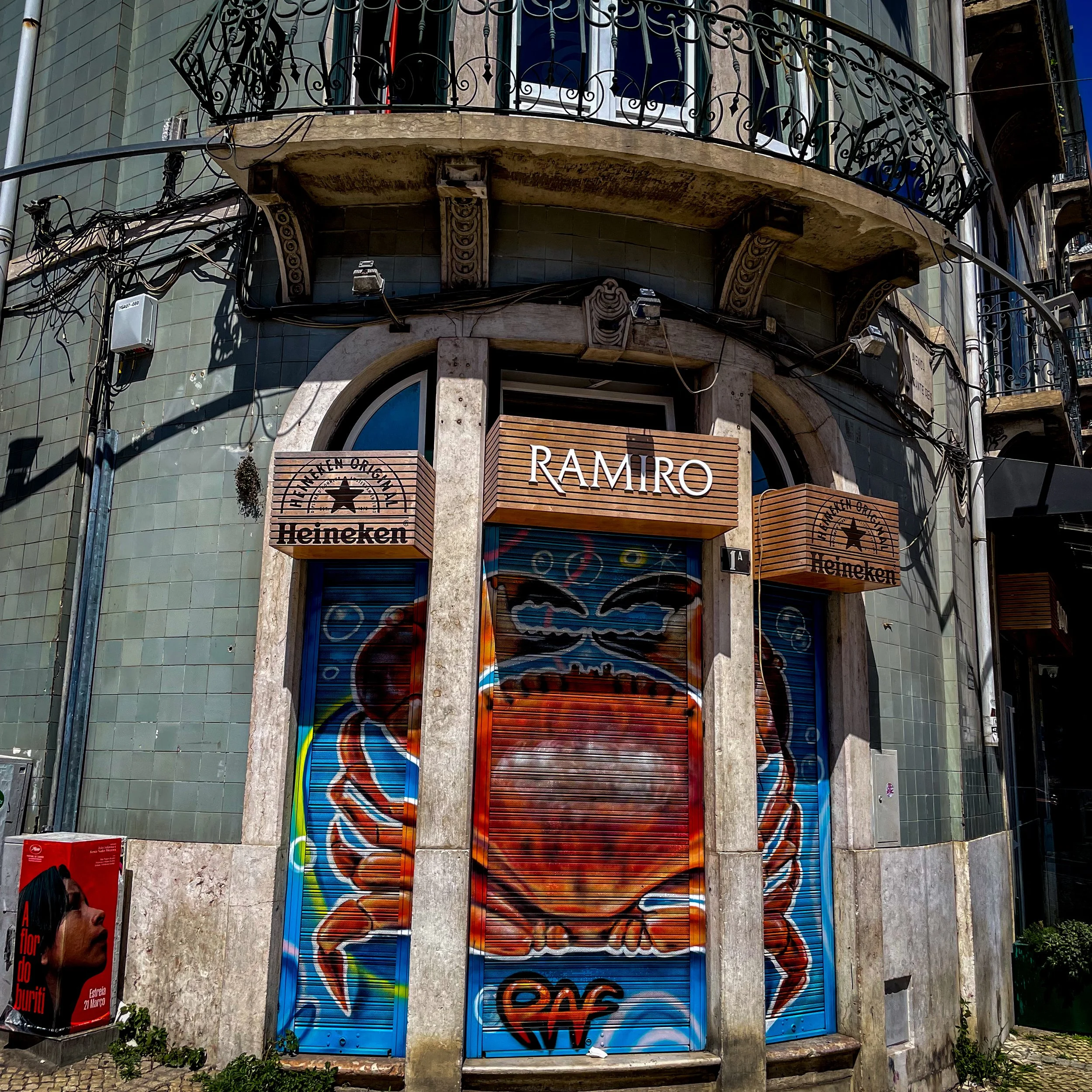
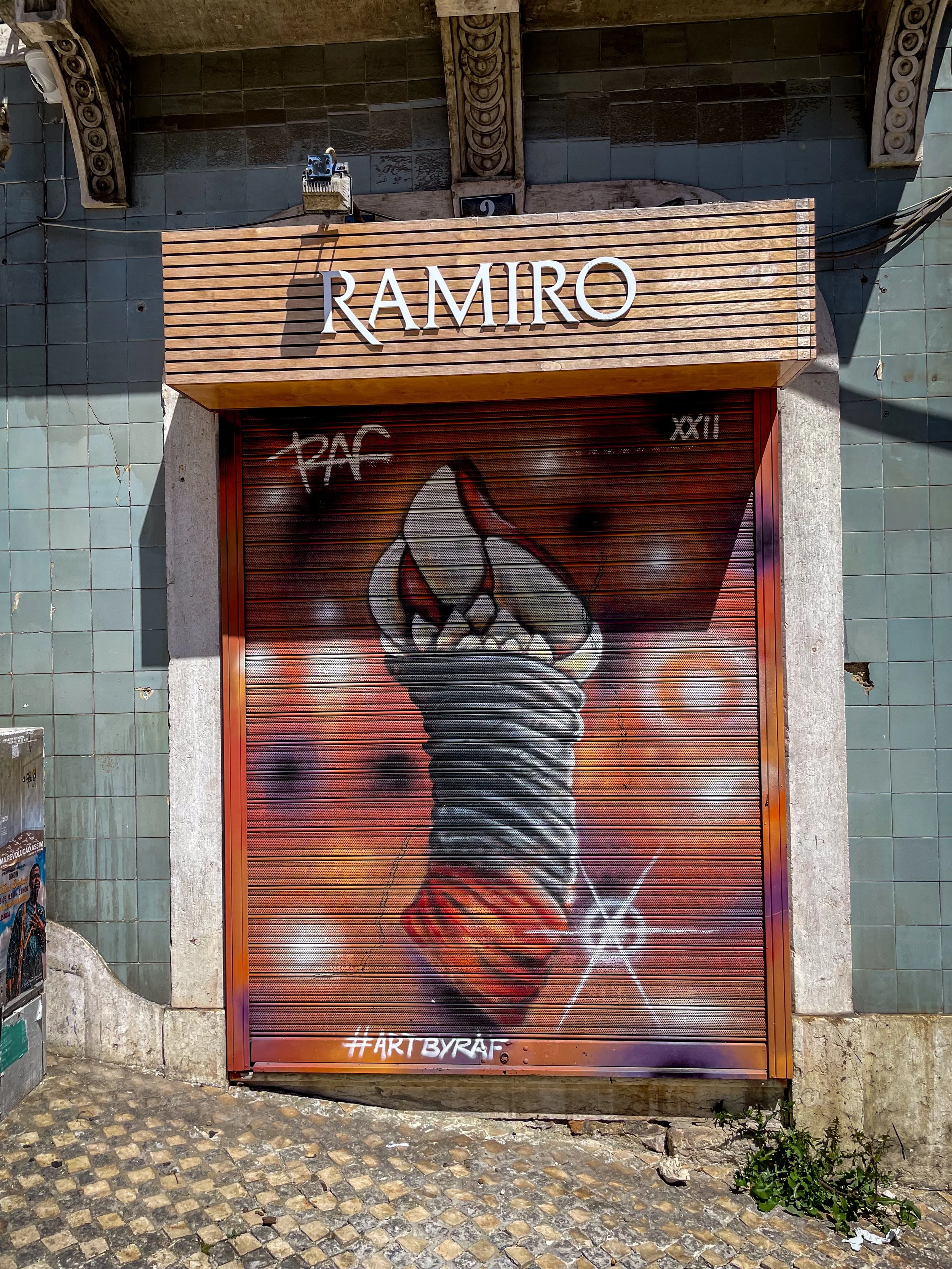
So we had reservations and showed up at Cervejaria Ramiro, Lisbon’s most famous marisqueira since 1956.
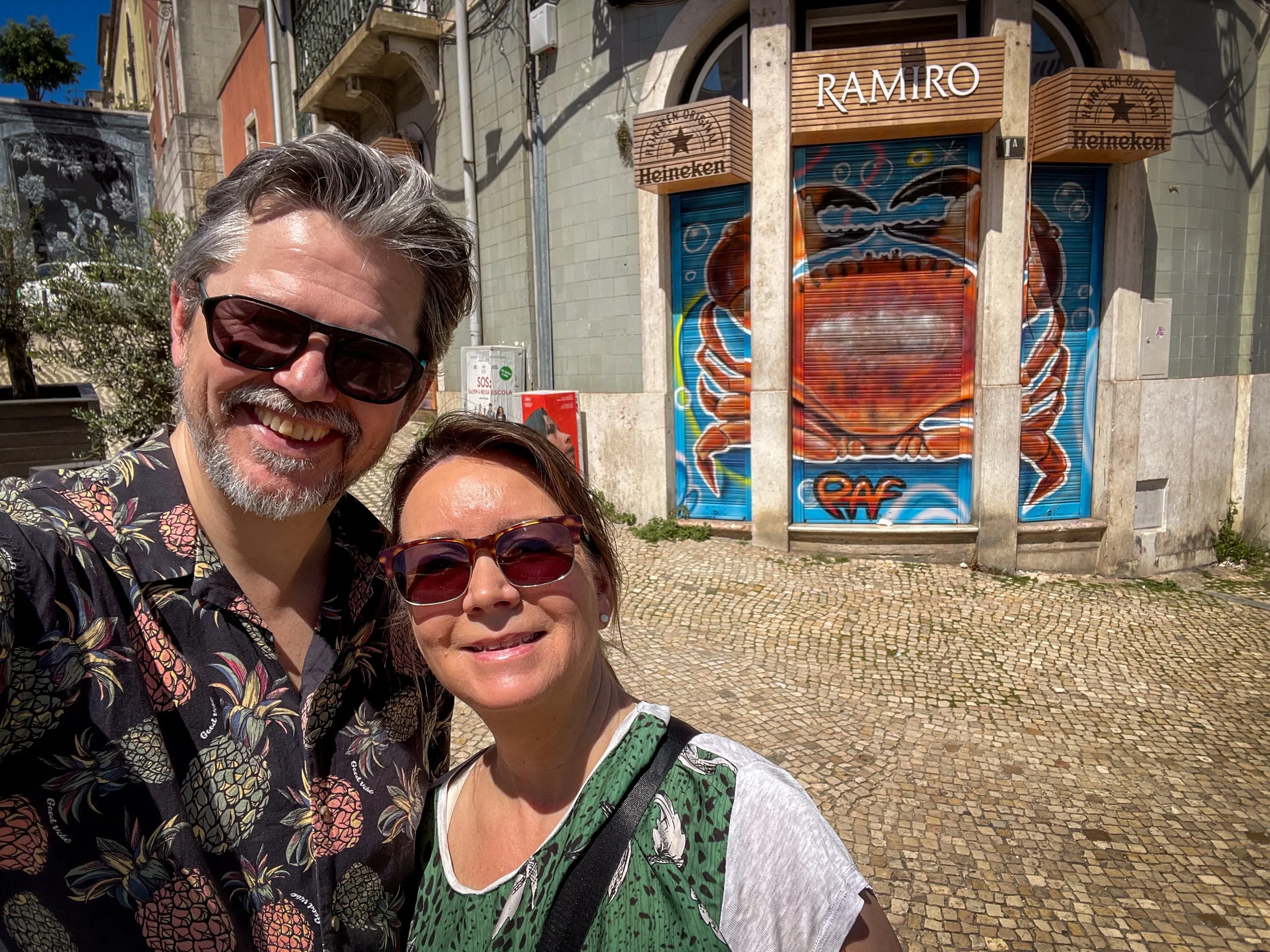
The place runs like a small military operation. An entire section of the restaurant fills up at once, all hungry, all slightly overwhelmed clutching menus for their bare life. As did we.
Restraint was not an option. We ordered enough food so you’d think we where expecting guests (we did not). If it becomes to much, we’ll just manage and skip dinner if necessary.
Nothing went to waste.
Not one shell.
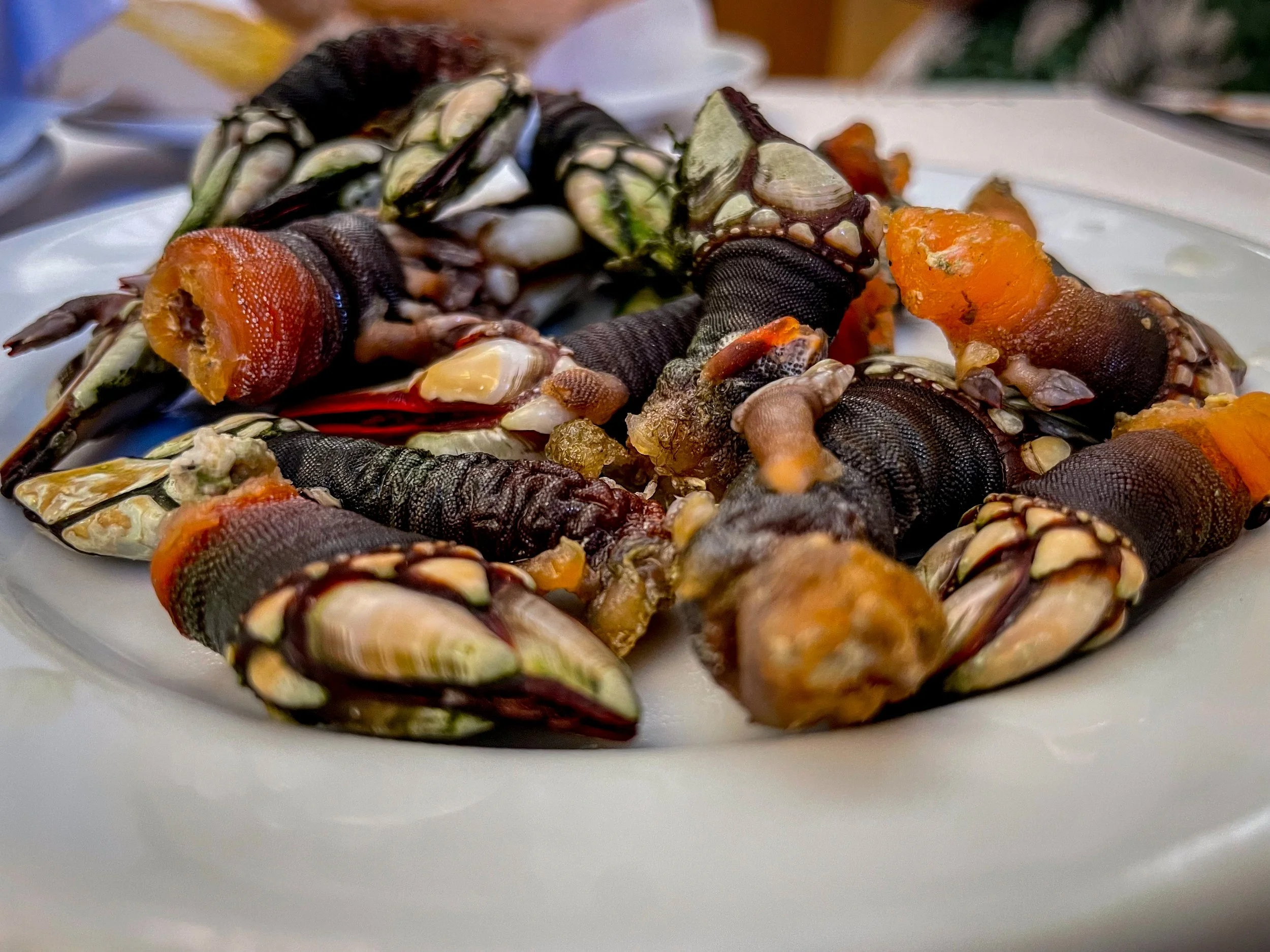
Goose barnacles (percebes) - looks a little like some kind of dinosaur teeth…
First up: percebes, or goose barnacles, which look like something that crawled out of a deep-sea documentary and onto a plate. This is where the trip took an educational turn — Thomas’ inner marine biologist woke up, and Nina got a full lecture on evolutionary adaptations while trying to eat her lunch. To be fair, the barnacles earned it: salty, briny, genuinely one of the best bites of the day.
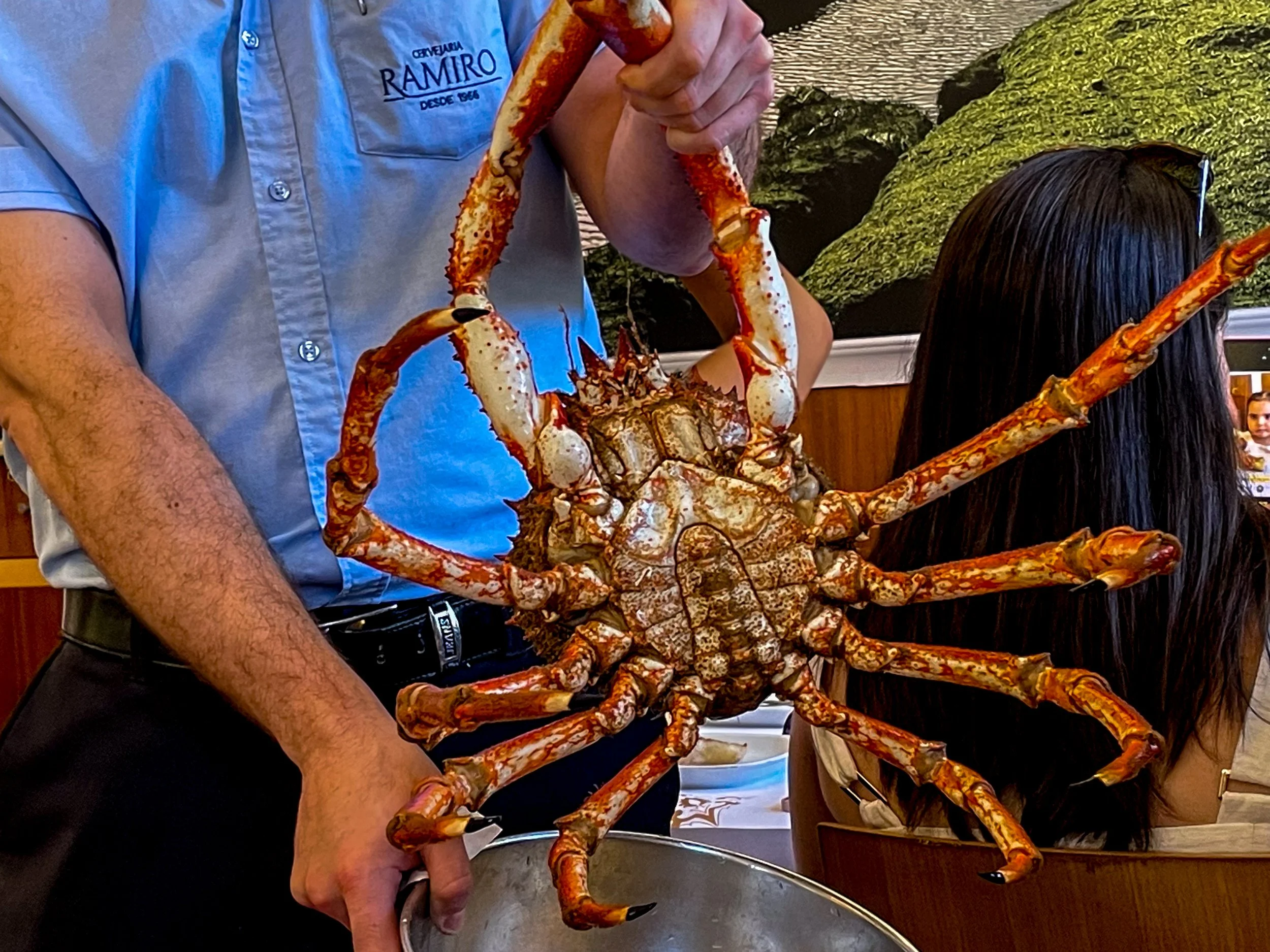
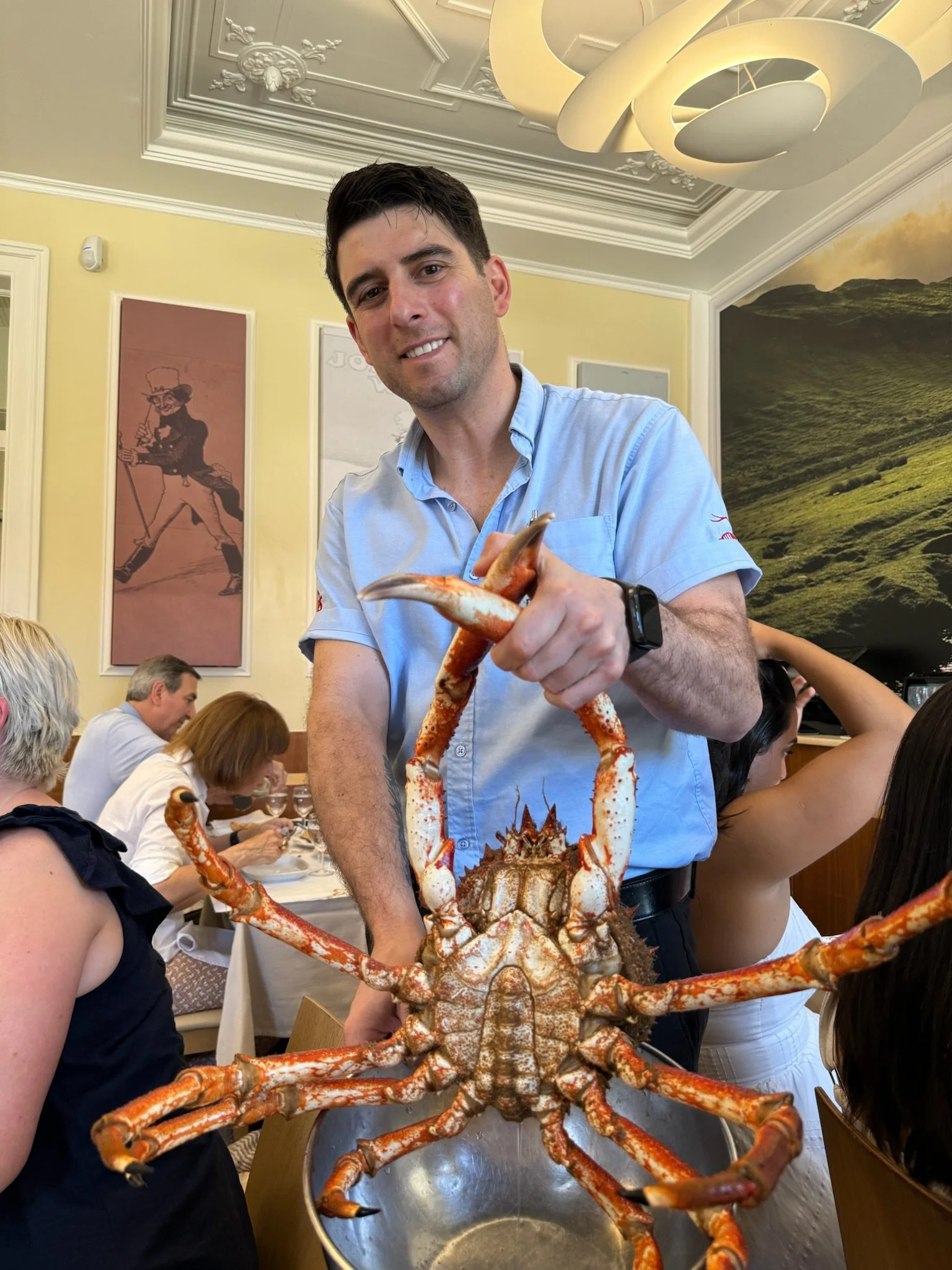
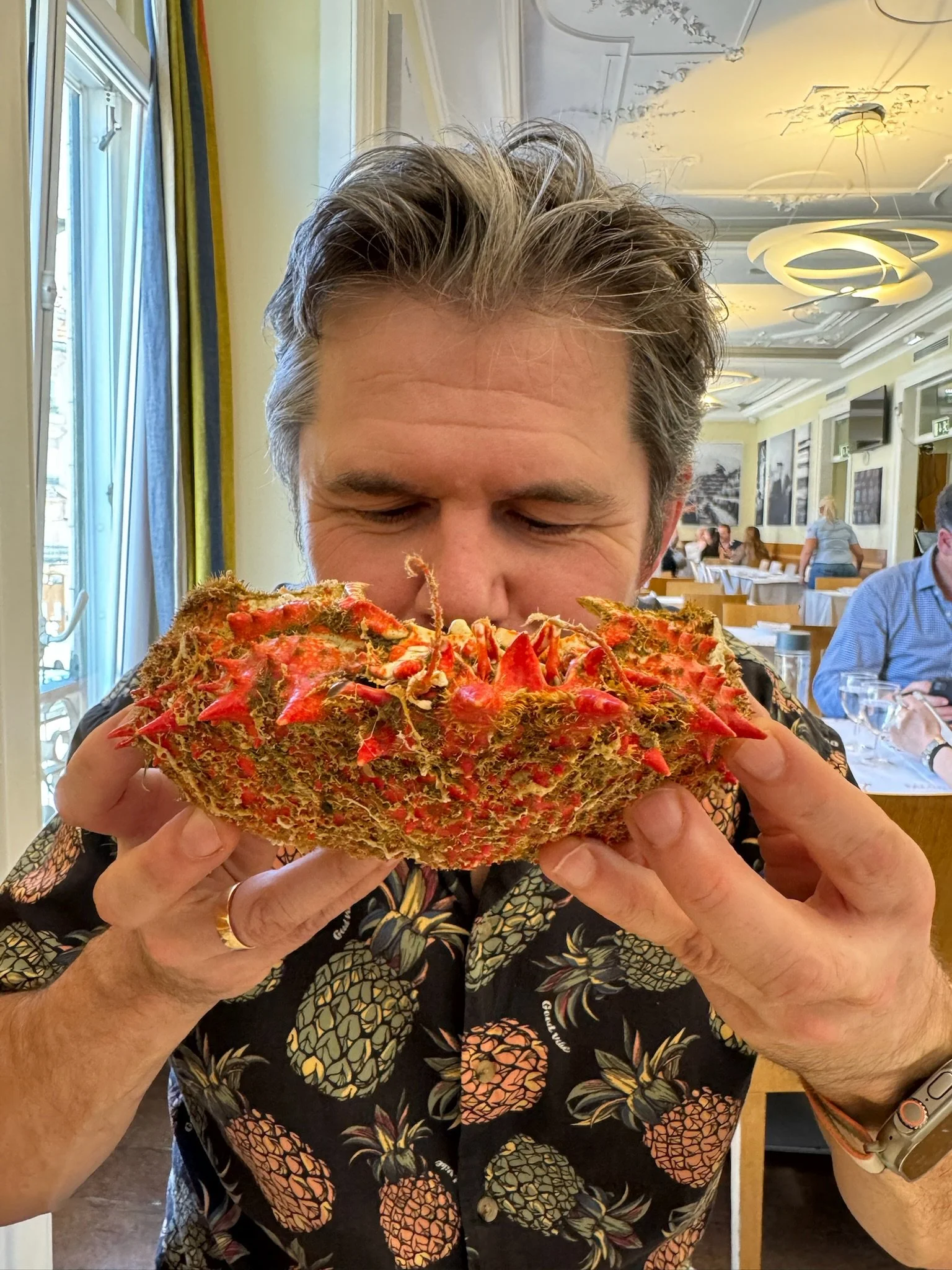
Our waiter presenting a large spider crab (santola)
Then came the santola — a spider crab of such size the waiter needed both hands and a bit of showmanship to present it tableside. Half meal, half performance.
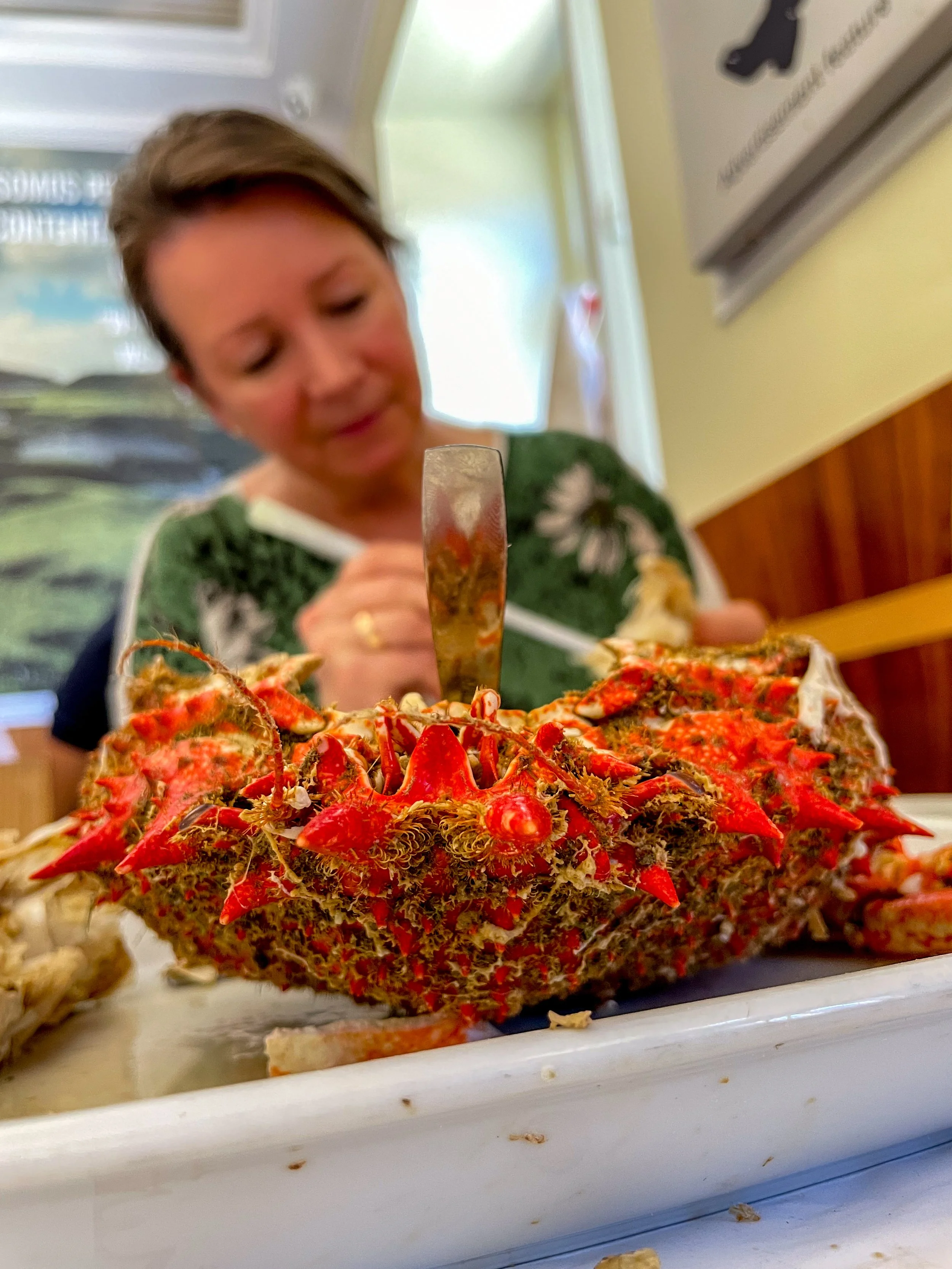
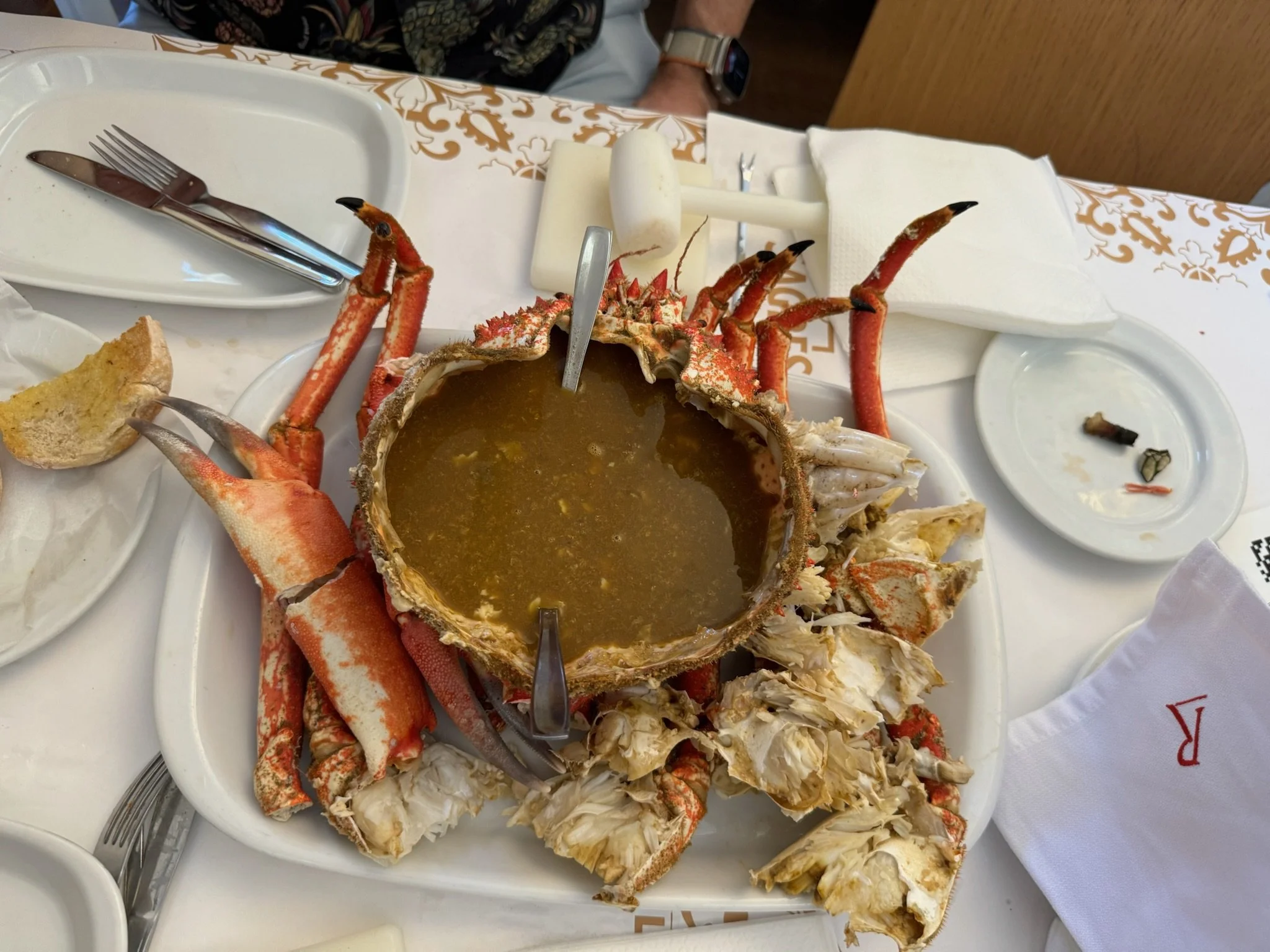
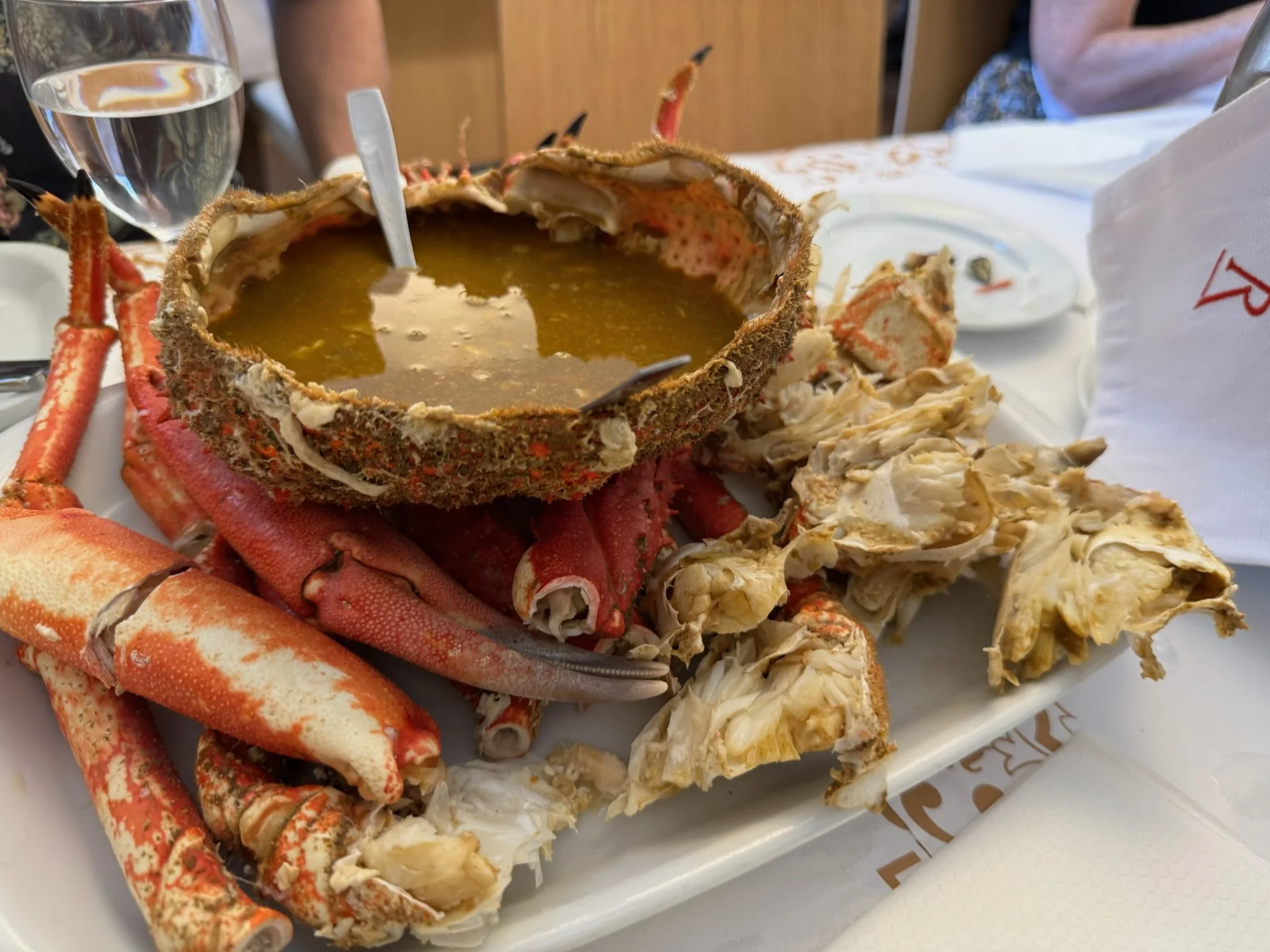
Nina took on cracking duty with the focus of someone defusing a bomb, and the payoff was sweet, tender, liquid crab worth every bit of the effort.
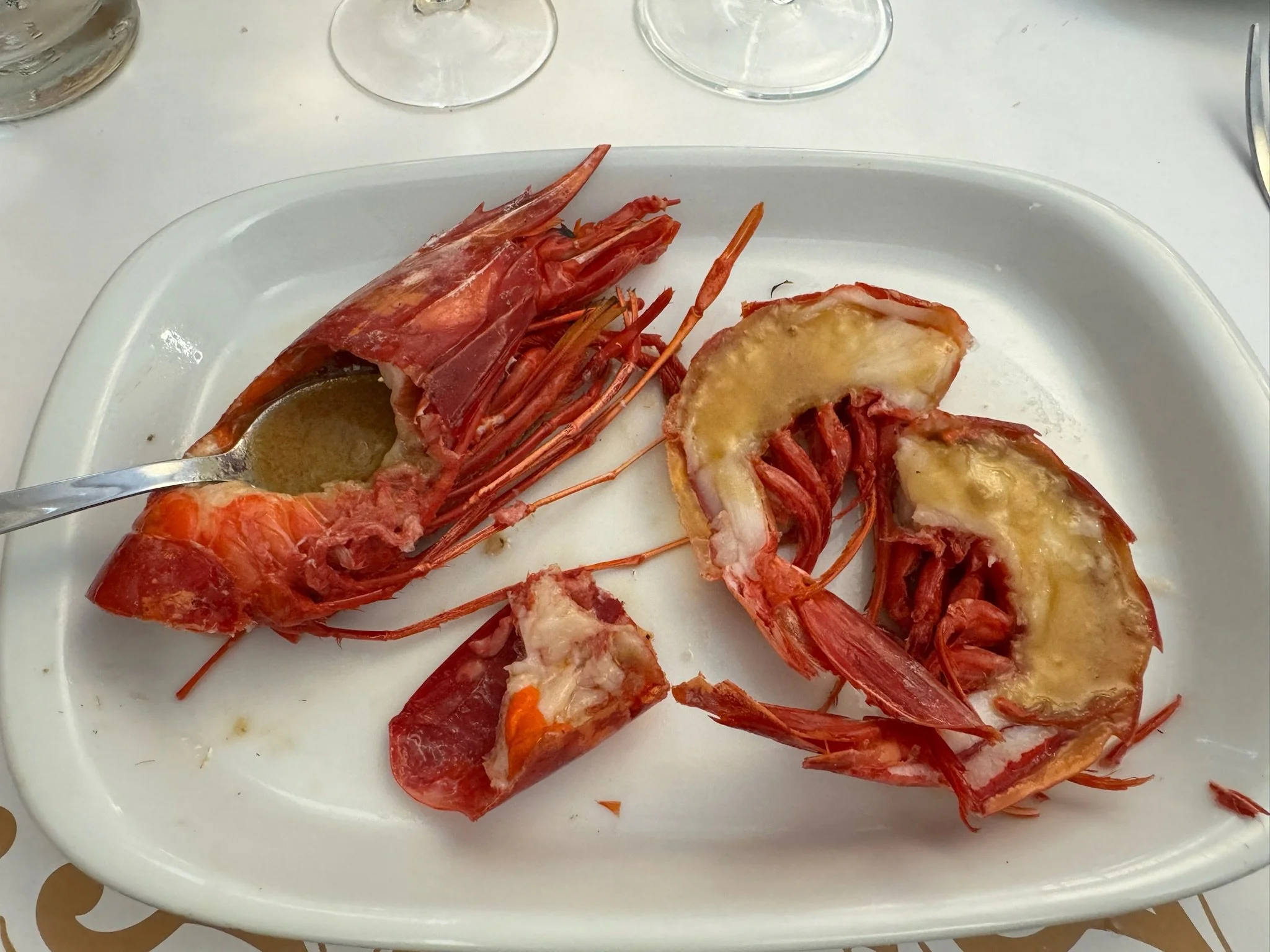
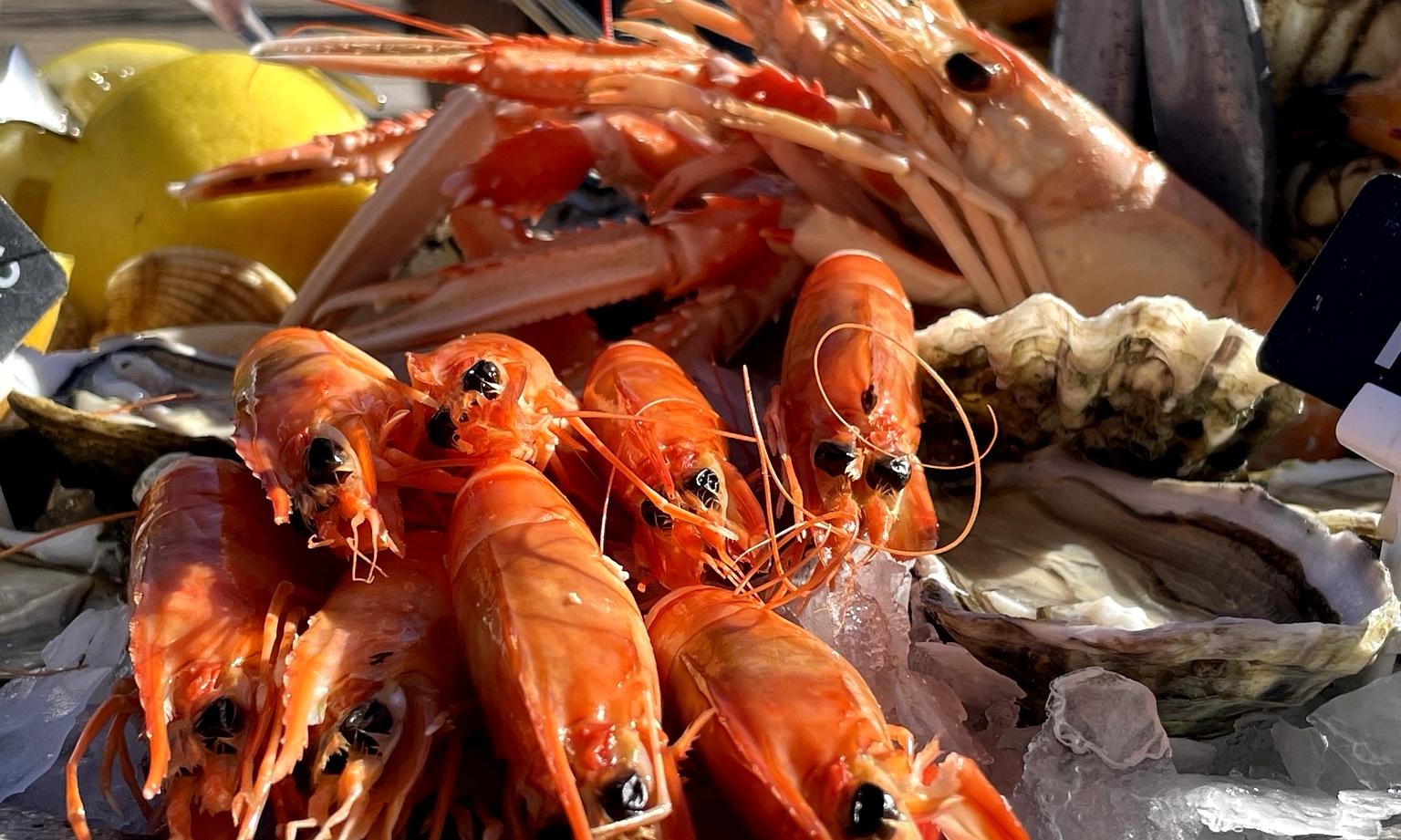
The scarlet shrimp was definitely the star of our lunch.
Glad the waiter did the preparations here - next time we´ll do it ourselves.
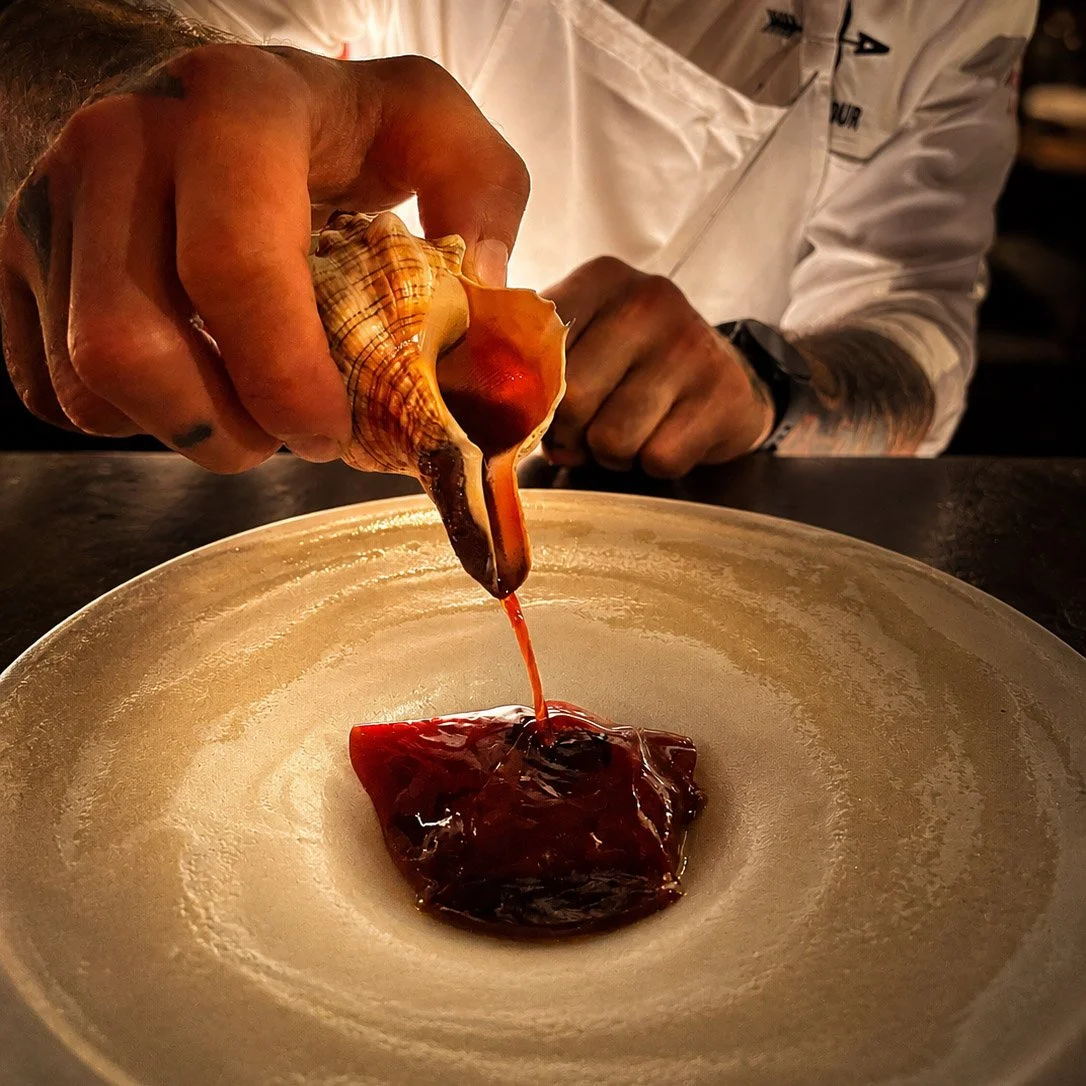
The carabineiro — scarlet shrimp, or cardinal prawn if you’re feeling fancy — stole the show on all fronts: culinary, visual, and dramatic. Its hepatopancreas turns liquid and doubles as a sauce, a fact Thomas’ inner marine biologist found far more delightful to explain than Nina’s patience found it to hear a second time that day. Rich, nutty, deep-sea flavor — a delicacy not everyone gets to try, and not everyone will want to know the biology behind.
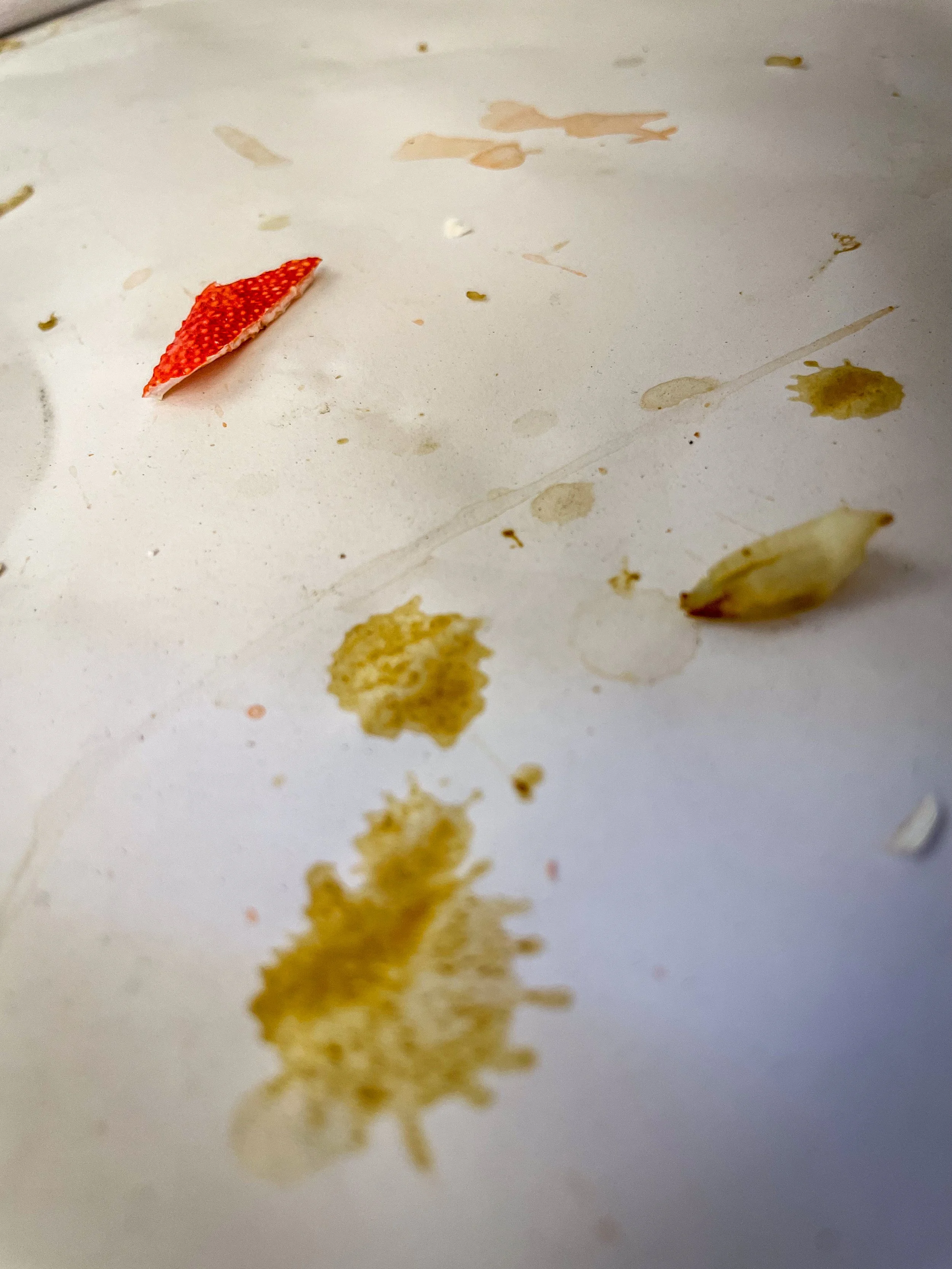
By the end, the table looked like a small crime scene, seafood edition — shells everywhere, hands sticky, appetites thoroughly defeated. Exactly as it should be.
Cervejaria Ramiro — recommended by musicians, approved by marine biologists, survived by no leftovers.