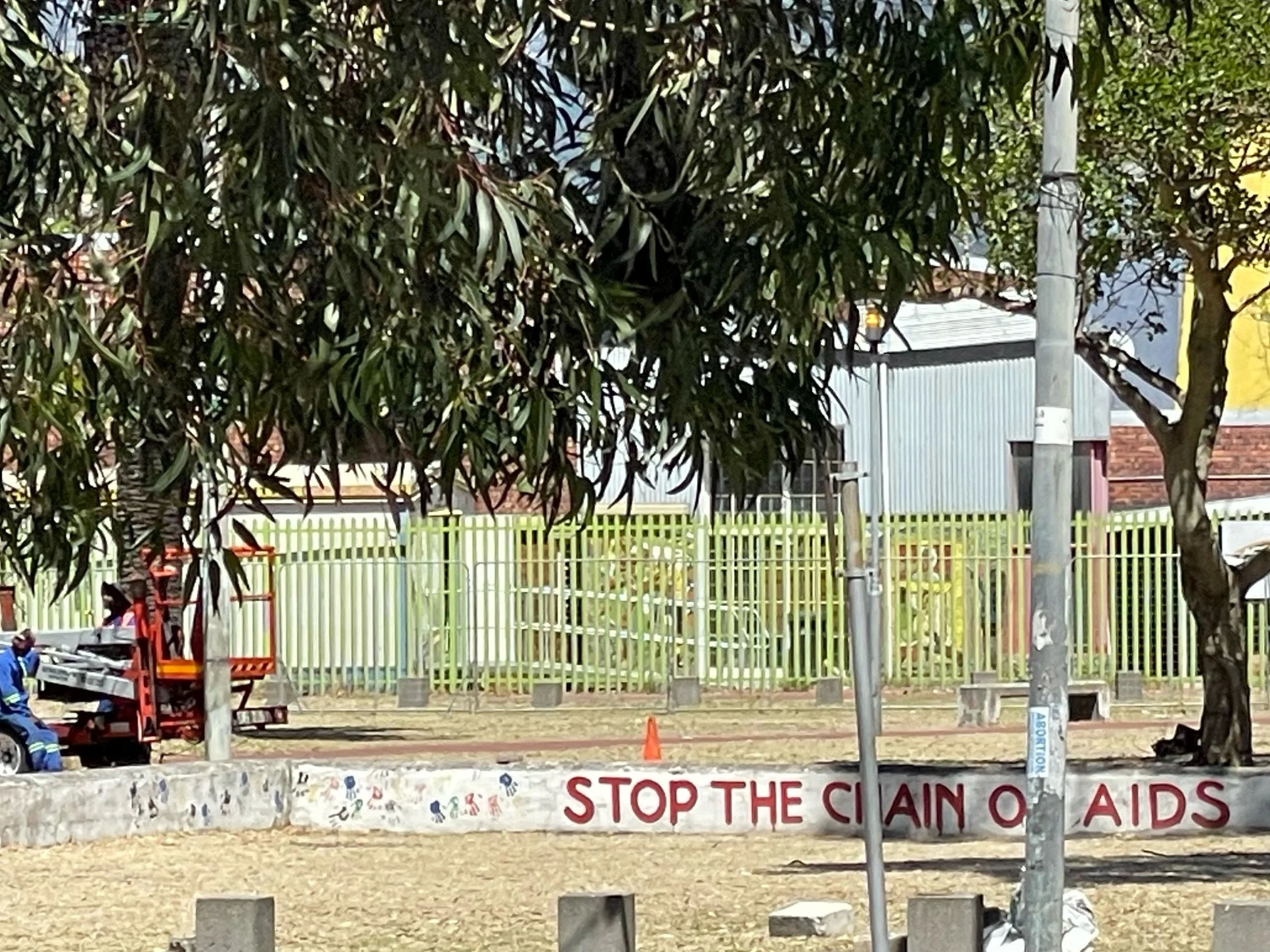
Saying goodbye to Cape Town: A township experience on our final day
We started the morning with our driver, Boonto — a Xhosa man whose name means “the one who gives joy and receives joy.” He laughed and said, “If you forget my name, just ask for Mr. Nice Guy.” And honestly, it worked. Nina had organized the tour through Siwive Tours, a locally owned and operated business that gives back to the Township by providing employment and opportunity to local residents.
On the drive out he shared thoughts that landed hard. He said people in Cape Town’s townships are “building their lives on the ashes of apartheid.” He spoke about “the lost generation” — two generations who inherited nothing: no businesses, no property, no capital, no footing. Decades of restrictions meant Black South Africans were legally barred from owning and running their own enterprises. Now, the focus is on creating generational wealth from a starting point far below zero.
Meeting Bongani and Chillz
In Langa we met Bongani — his name means gratitude. Calm, gentle, easy to trust. He guided us to the cultural centre, where we met Chillz, a multitalented artist who works across styles and mediums. He showed us his own work and pieces by colleagues.
Chillz is devoted to the children of Langa. He spoke about how kids live in a world of imagination while adults move in a more grounded reality — and how art can bridge those worlds. He also works actively with themes of women’s independence and the fight against gender-based violence. Many of his pieces carried sharp, necessary messages: respect women; stop rape; break the cycle.
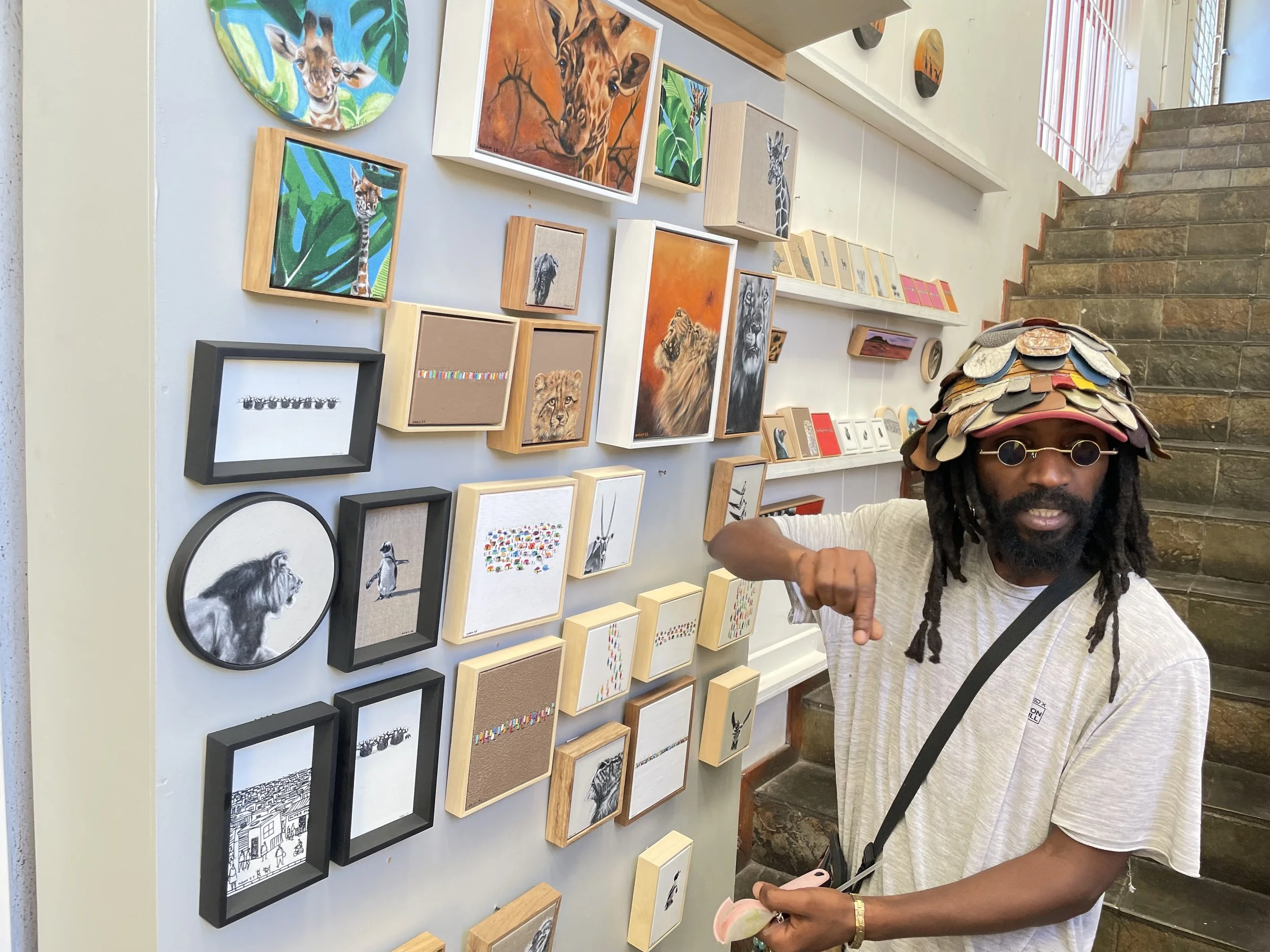
Chillz Lwando
Walking From Hardship to Hope
Bongani then, led us into Langa. The route was deliberate — moving from the toughest living conditions to the more hopeful ones.
We began in an old government building from the apartheid era, where Black South Africans were detained for trivial “offences” like walking without their passbook. The pass determined where you were allowed to be and when. If you were in the wrong place at the wrong time, you could be arrested instantly.
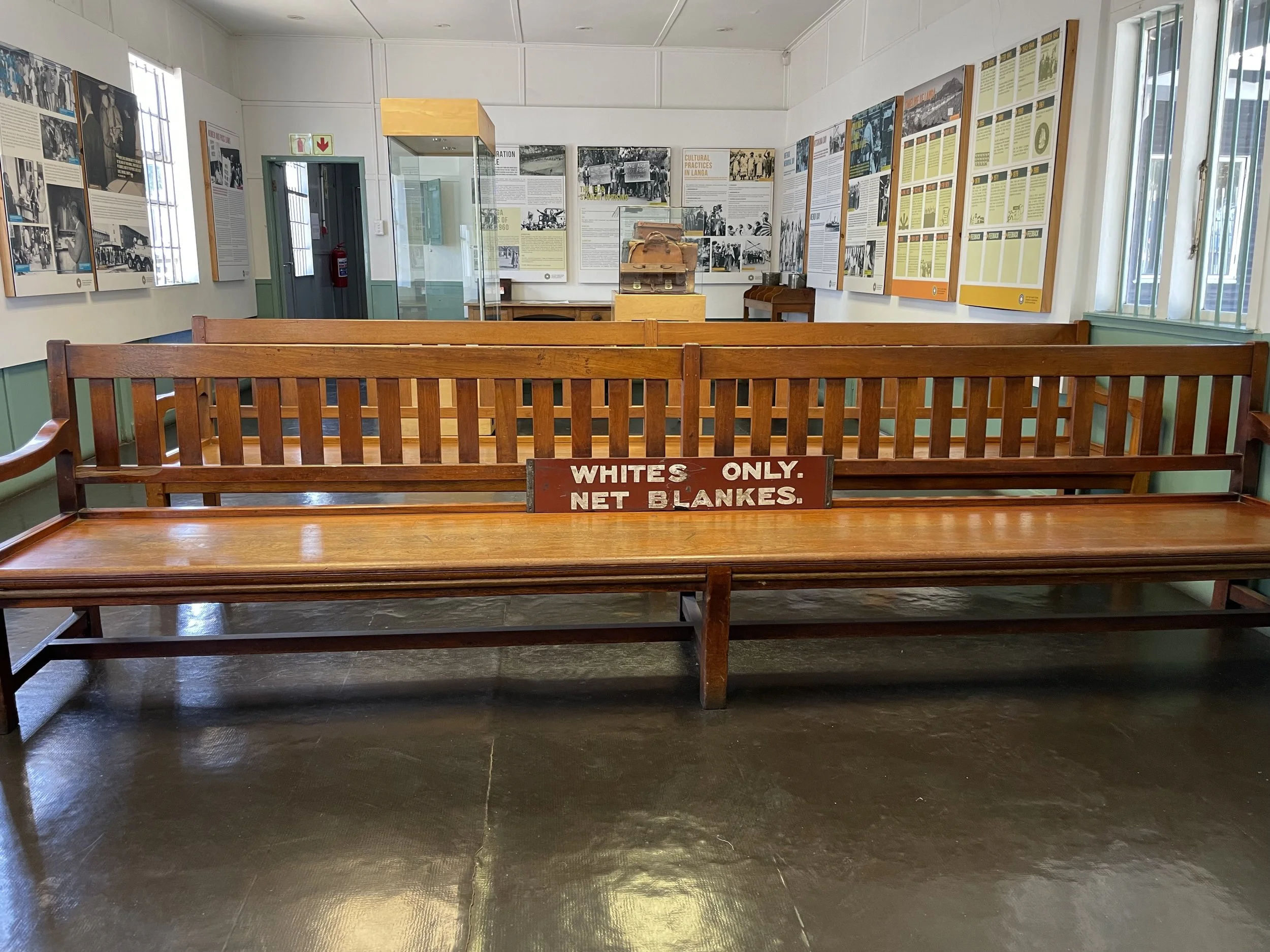
He showed us a holding cell that we though could fit maximum 20 or 30 people if they where standing very close. It usually held 200. Packed bodies waiting for judgement over nothing. It was a heavy room to stand in.
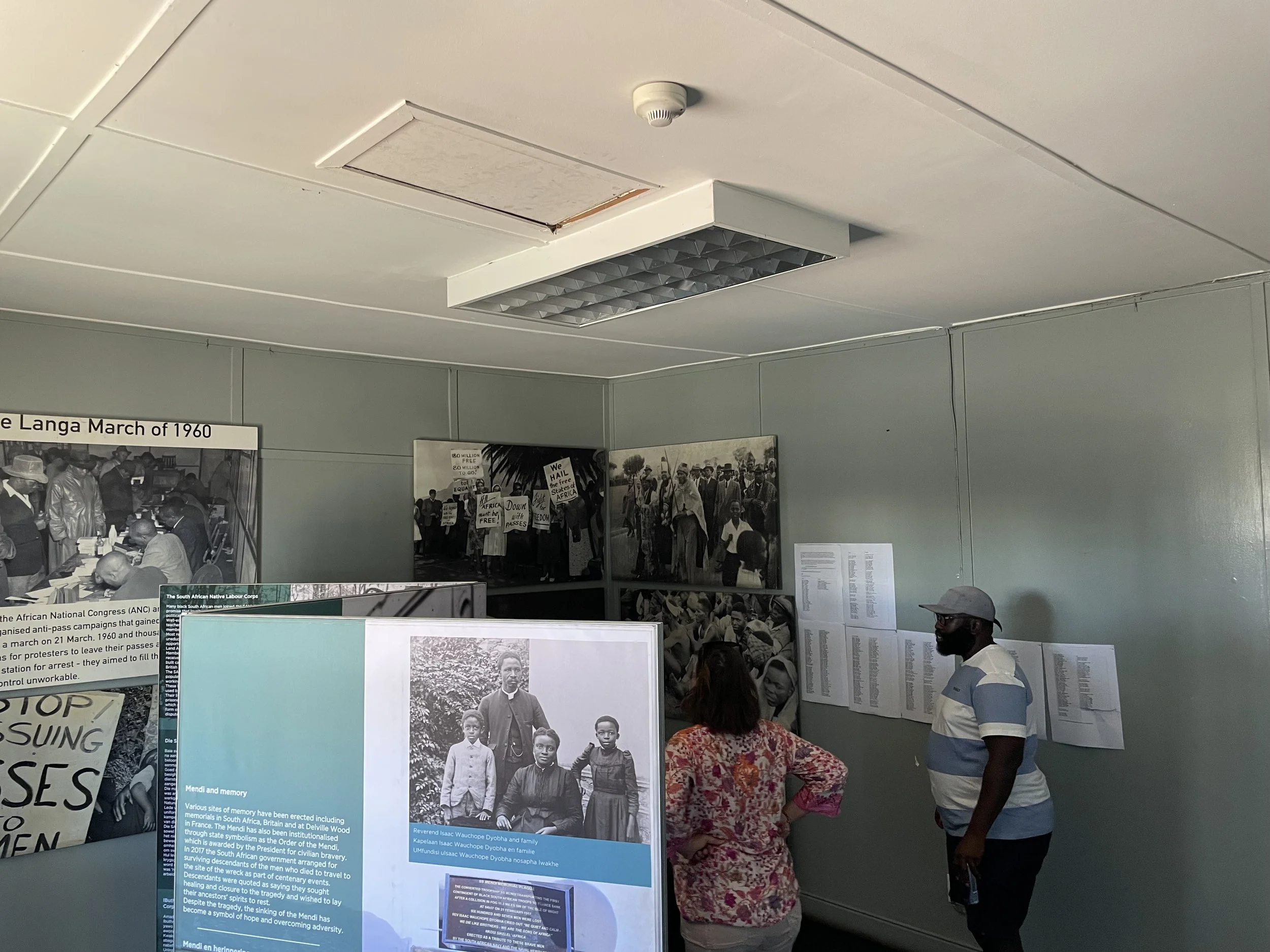
Up to 200 men where detained in this room while awaiting “trial” for meaningless charges.
From there we walked to a housing block where multiple families shared a single building. Each family had one room. Everyone shared a tiny kitchen space with one fridge. Life reduced to the essentials.
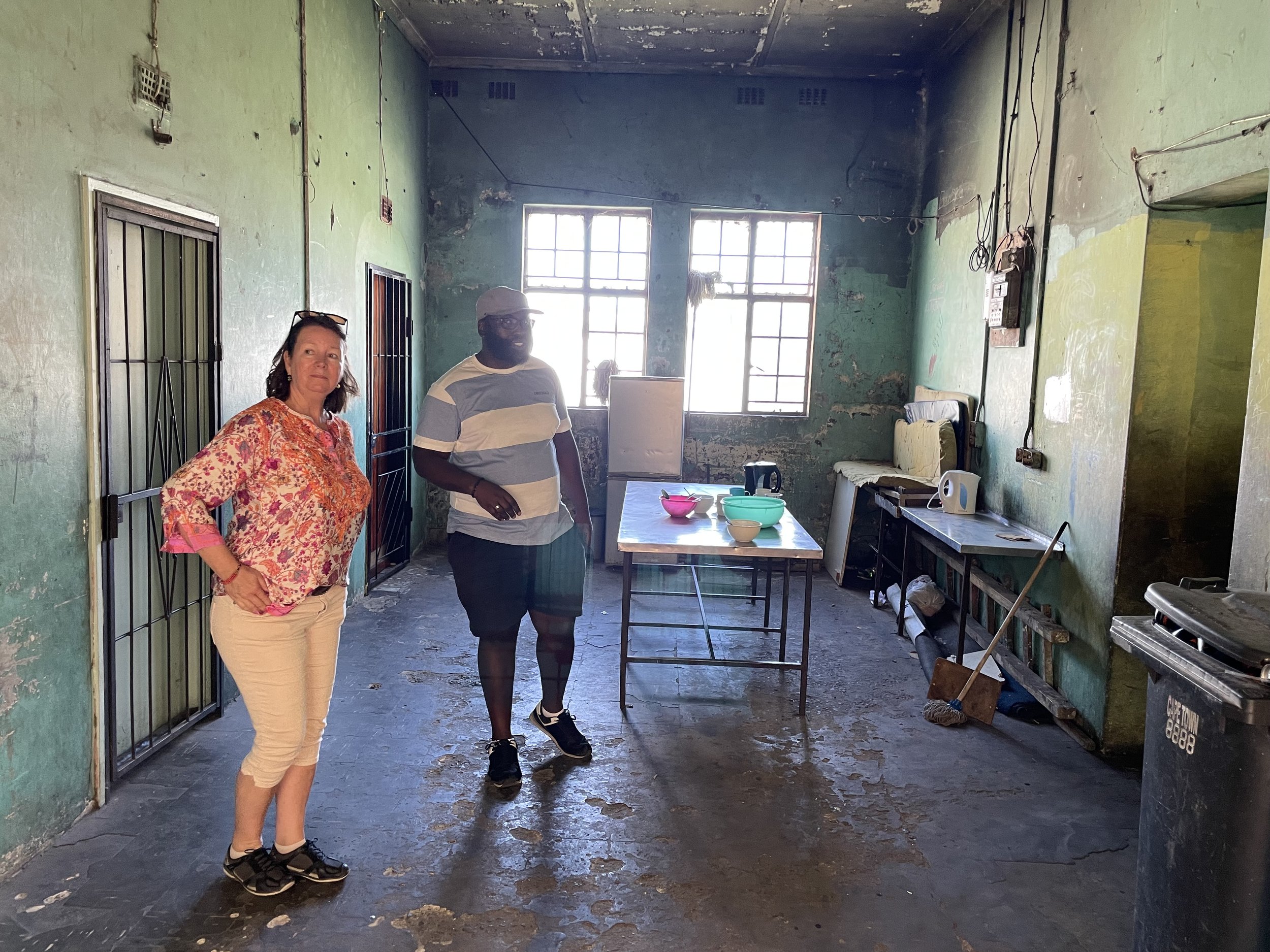
Each family occupies one room and shares this communal area.
The Container Home
Next, we visited a man living in a shipping container — half a container, divided by a thin wall. A bunk bed filled most of the space. A narrow gap led to a shelf unit with a big TV, something we’d already learned was incredibly important for staying connected with the world outside.
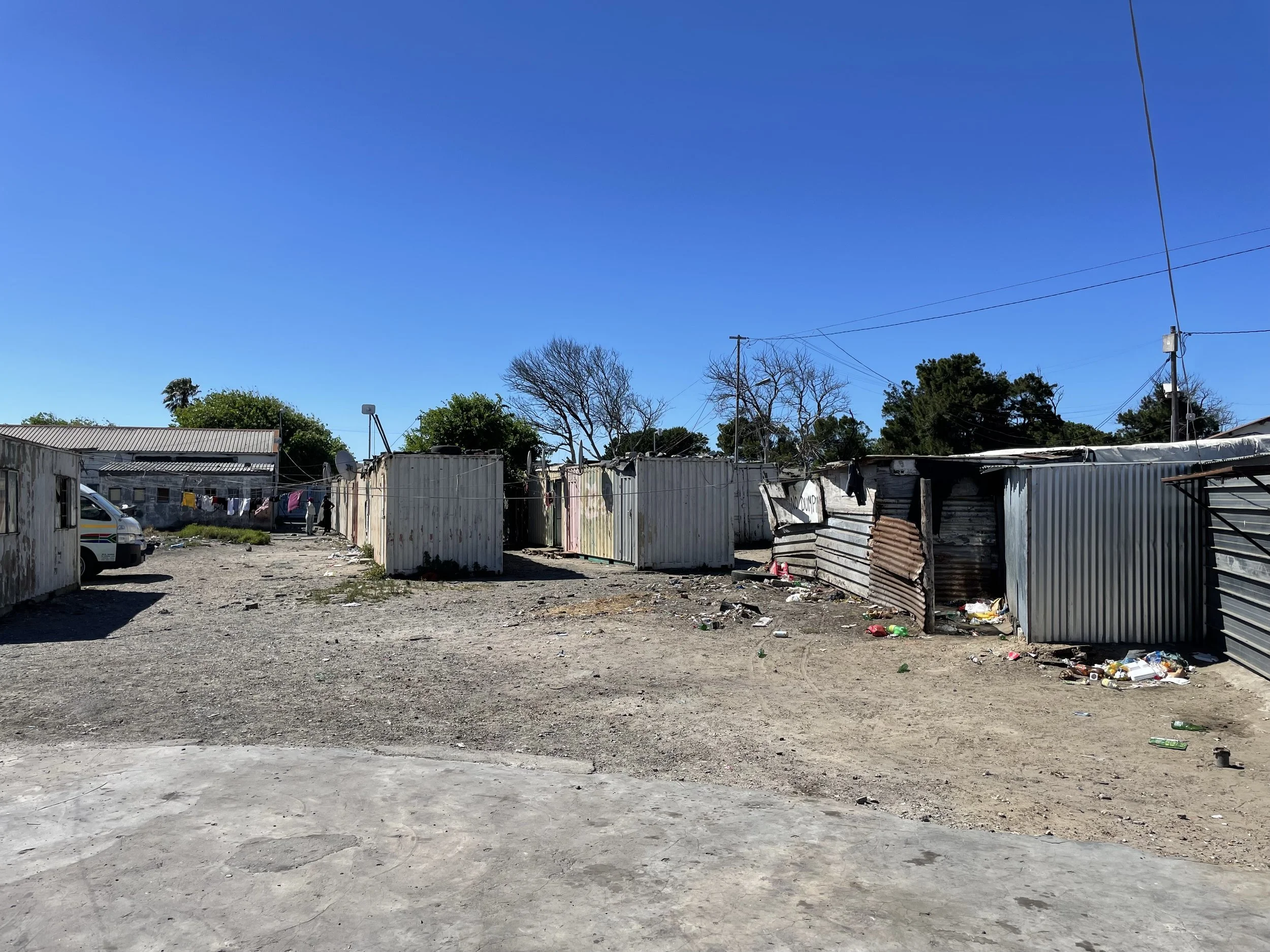
We visited a man living in one of these “temporary” containers.
We asked how many lived there. “We are four,” he said. A couple and two children. They came from Eastern Cape and stayed because of work — whatever work he could get. The container belonged to the government, not to him.
A Step Up: Government Housing
A few streets later, we reached more permanent housing (the containers where temporary, and had been so for the last few decades…): two-storey brick buildings with small apartments. There was rubbish here and there, but the improvement was obvious. These homes were also government-built and allocated through a housing queue that can take decades. Corruption often decides who gets a place.
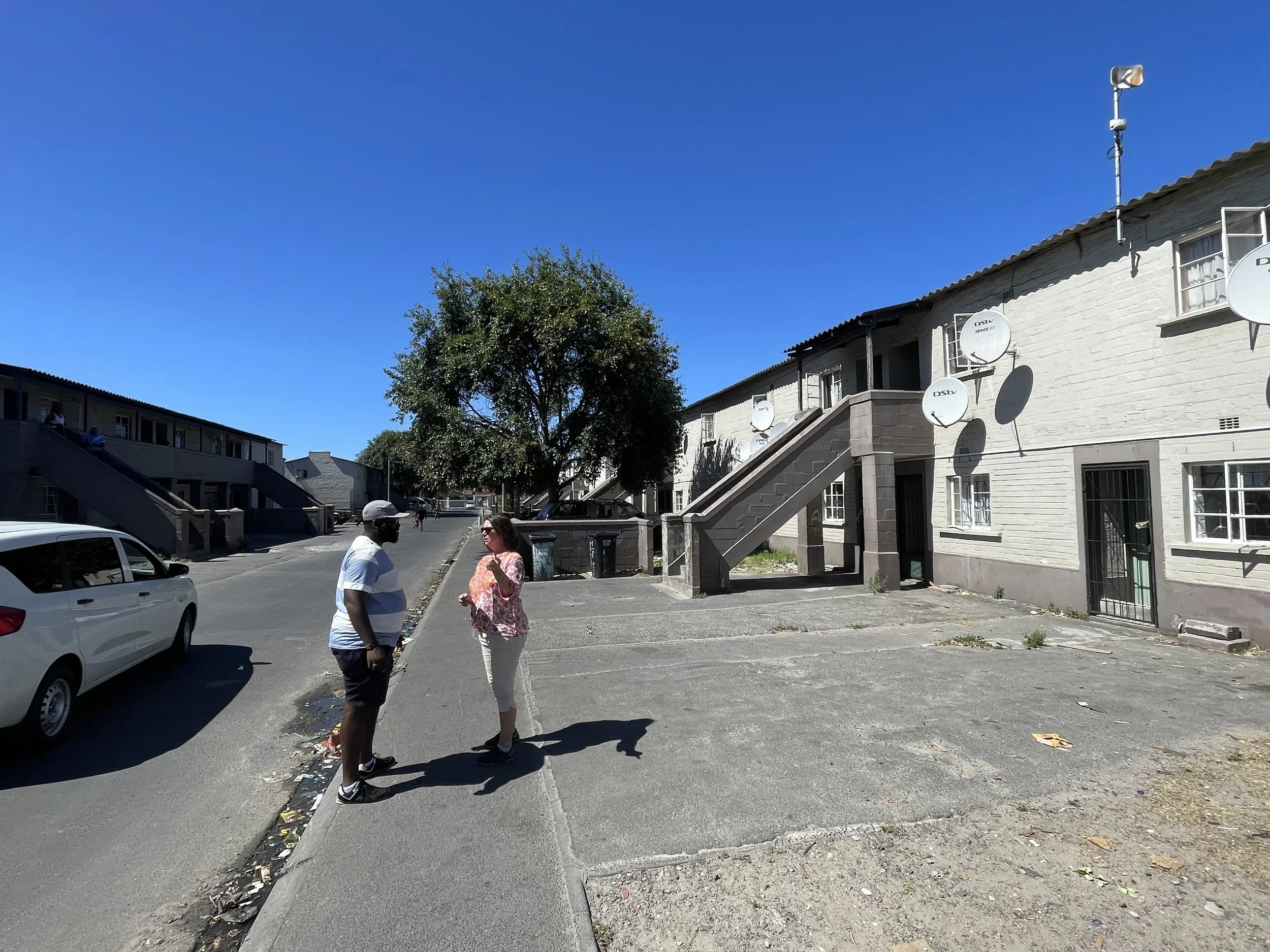
The living standard increased with these houses.
They can eventually be bought, but only after living there for ten years — and most never manage to afford it.
Then there was the Braai area - in the township there is one delicacy in particular, the sheep´s head. The other thing they love to BBQ (braai) is chicken legs. “Is there any meat on that?”, we wondered. Bongani assured us that we would be surprised.
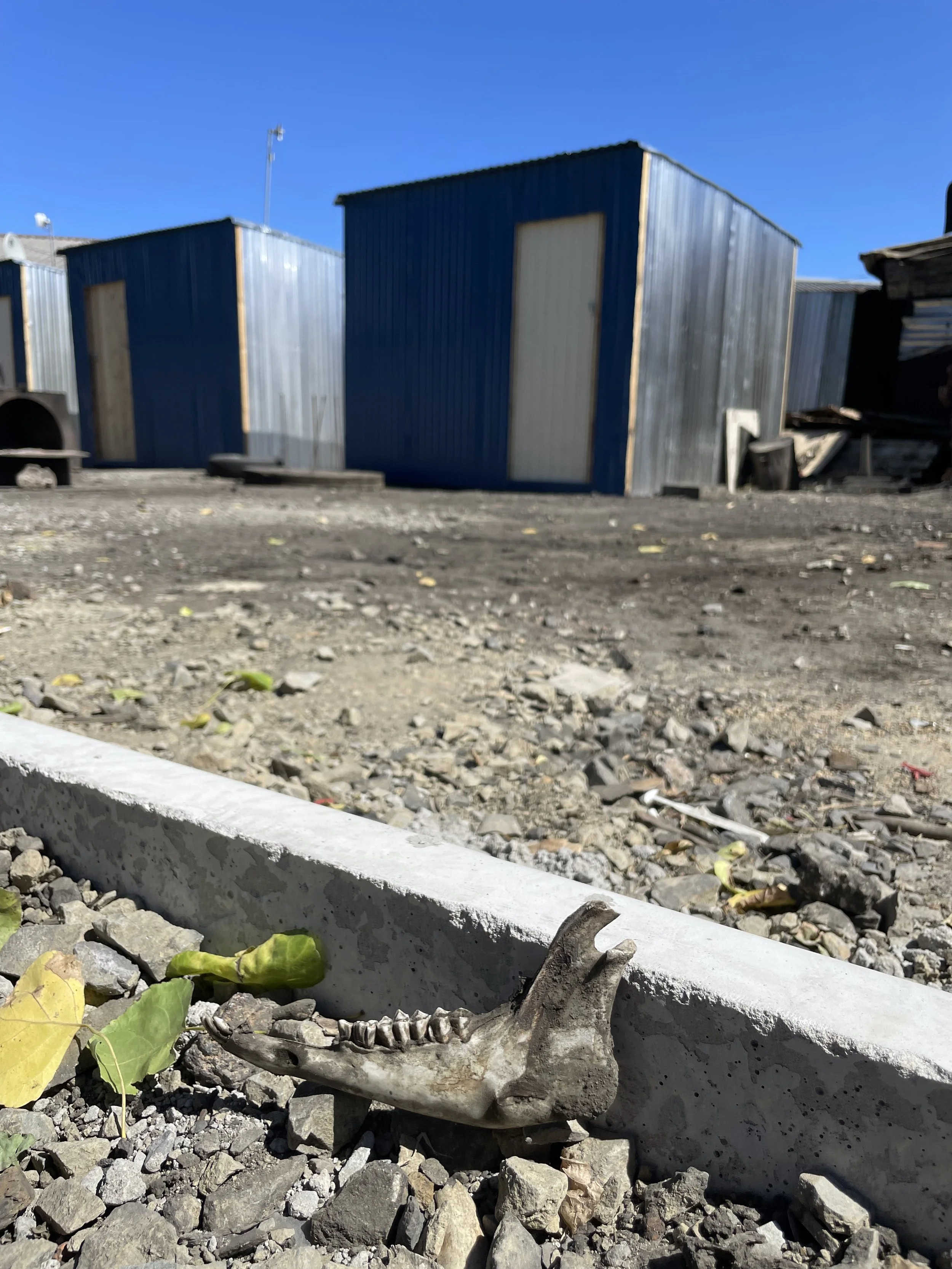
The braai area. I just wish I had time to attend a braai here!
Langa’s “Beverly Hills”
Then the contrast sharpened. Suddenly we were standing in what Bongani called Langa’s Beverly Hills — a perfectly normal suburban neighbourhood with gardens, garage doors, and cars in the driveway. These homes are privately owned. To live here you need to earn roughly 50–70,000 rand per year. Modest by Norwegian standards, but a clear leap within the local context.
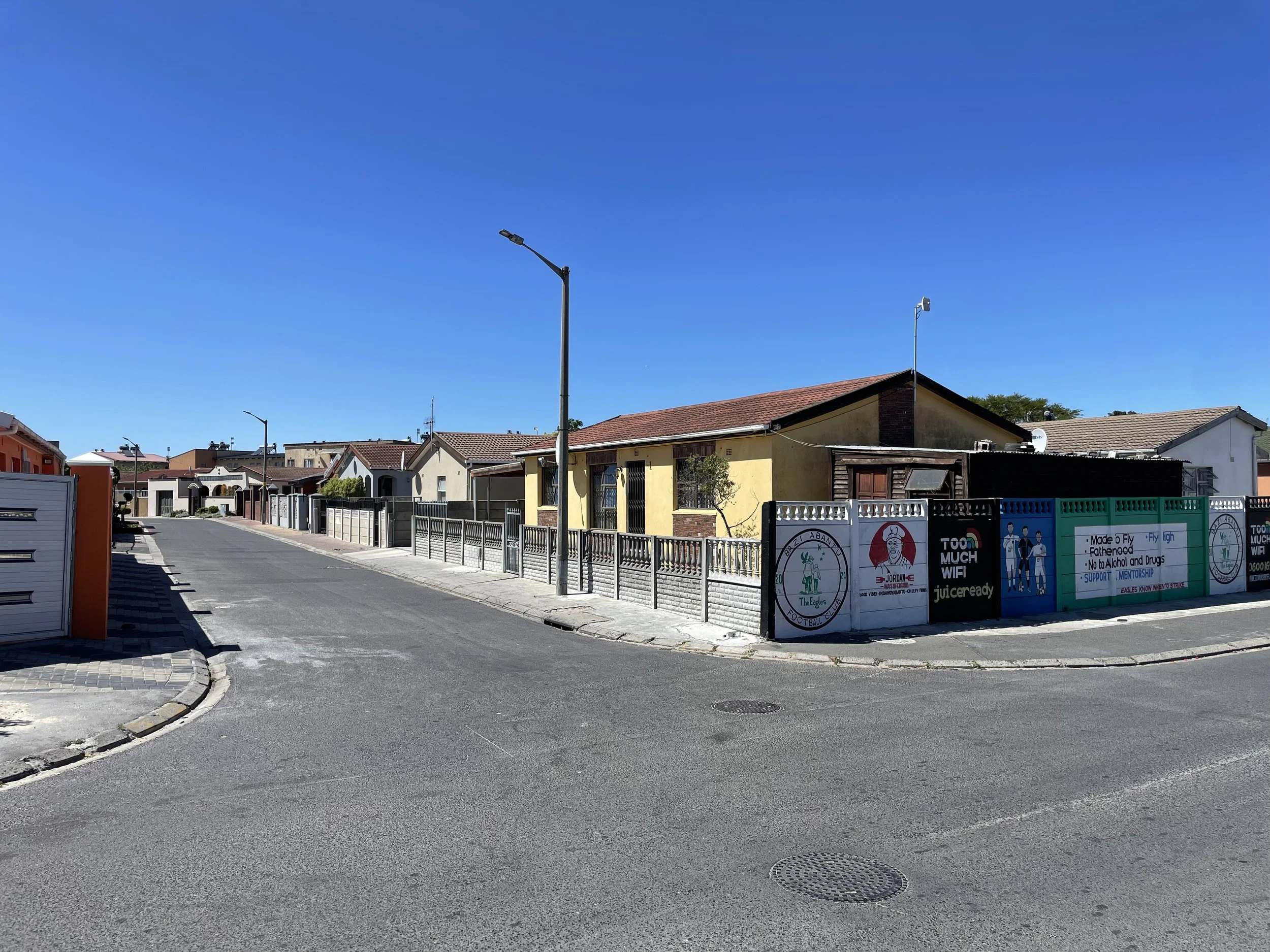
The living standard can also be quite good in Langa, although there where not many houses like this.
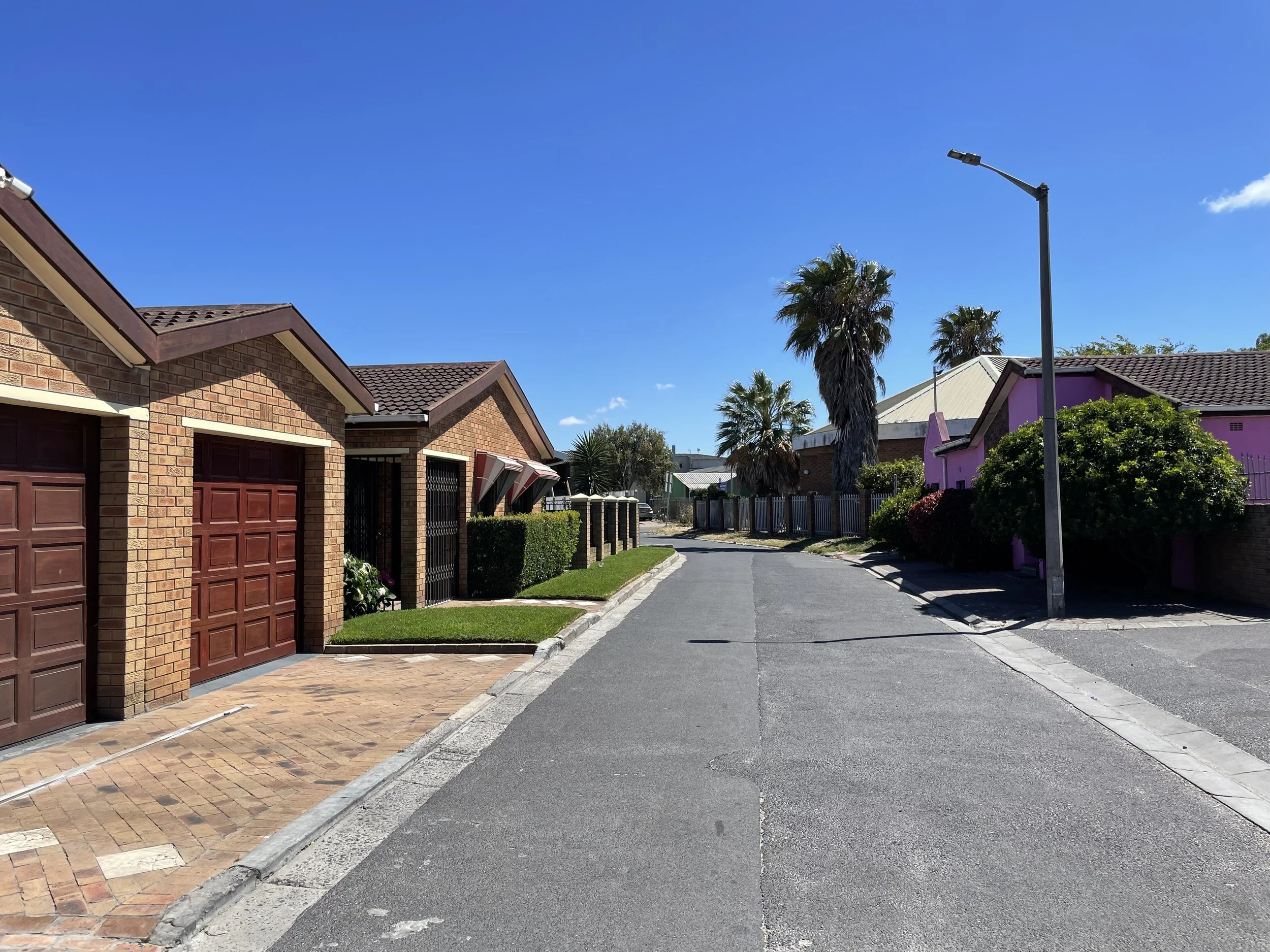
The living standard can also be quite good in Langa, although there where not many houses like this.
The Children of Langa
Along the streets we met many children. A group of girls asked softly if we had sweets. We didn’t — and immediately wished we had. Next time, we’ll bring treats.
Outside the communal housing building, a few girls approached and asked if they could dance for us. Of course we said yes. One ran off and came back with a drum. Another started singing. Then more children arrived. Four became five, then eight — a small explosion of rhythm and energy.
They danced, drummed, sang. And even though Thomas likes to think of himself as fairly tough, he was obviously moved.
Afterward they collected a few rand. Bongani explained this was exactly the point: teaching children to create their own small businesses, to earn, to build pride. It was the economy in its simplest form — and its most beautiful.
We also talked about crime levels, and he said Langa is relatively safe because the community works hard to keep it that way.
He told a story about his niece, whose phone was stolen. They didn’t know the thief, but they knew his mother. She said, “He comes home for dinner at seven.” So they waited. And when he arrived, she told him plainly: if he lived like that, he wouldn’t be welcome at her dinner table. That was enough. He handed the phone back. Sometimes justice looks like neighbours holding each other accountable.
A Story About Community
That evening, Langa was preparing for its annual light festival — a township-wide celebration marking the moment the Christmas lights are switched on. Everyone comes out for it. There would be braai (BBQ) smoke drifting through the streets, music, dancing, families gathering, neighbours sharing food, and a general sense of joy. And, of course, alcohol. We had already noticed empty gin bottles, beer cans and broken glass scattered here and there — small clues of nights that had been well celebrated. It’s clear that drinking plays a visible role in township life, which is perhaps not surprising, but it’s also part of the rhythm and release of a community that carries a lot on its shoulders.
On the drive out, we passed another township — one for the “coloured” community, another reminder of apartheid’s categories.
What We Took With Us
Visiting Langa was important. A township isn’t a spectacle — it’s a community, full of life, struggle, hope, and people building something from almost nothing. Langa felt like a place doing the hard work of shaping a different future.
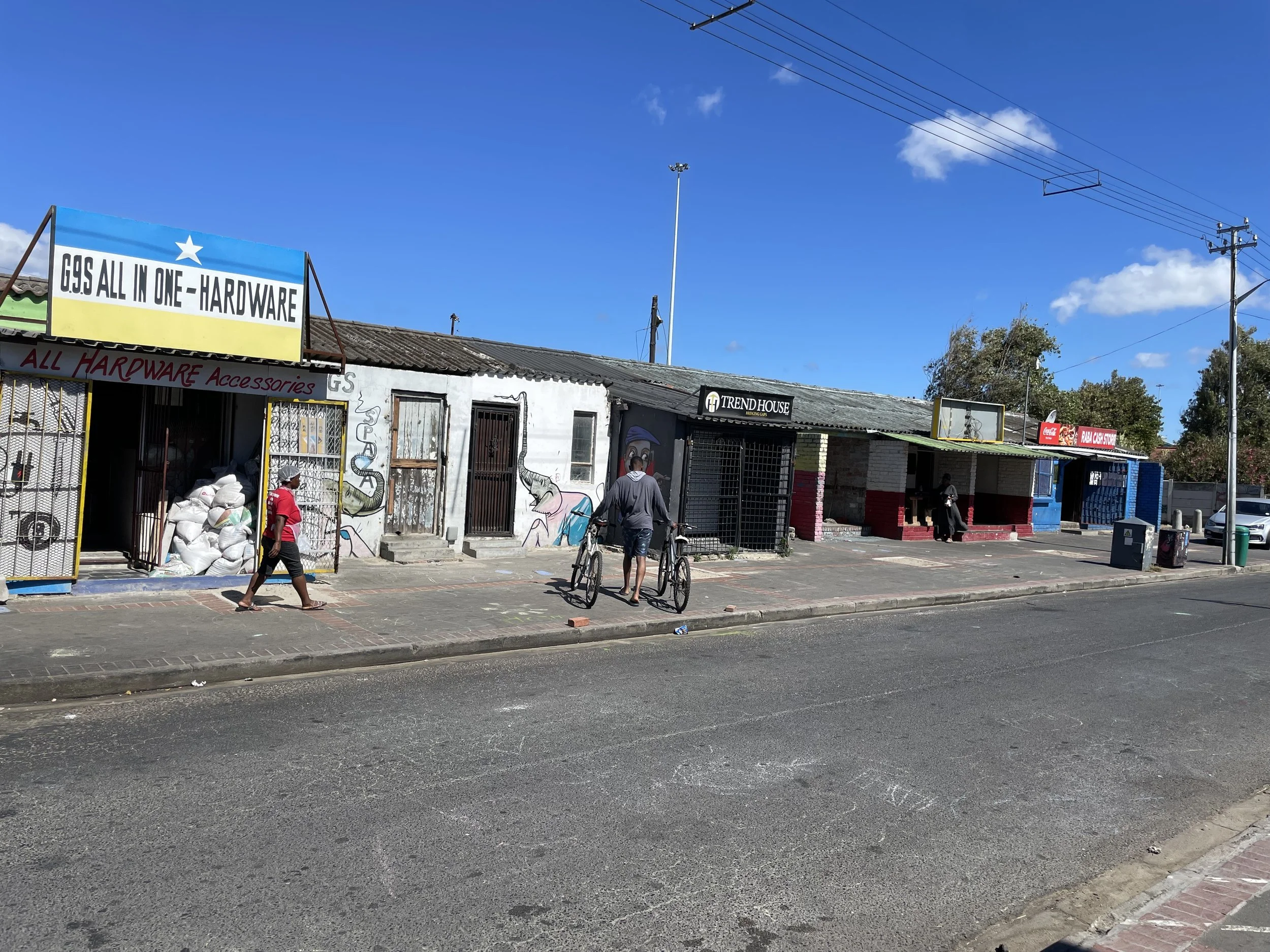
A commercial area in Langa - not to different from the neighbourhood Thomas roamed as a child in Benin.
If you ever come to Cape Town, go with an open mind and a good guide. It’s an experience that stays with you.